Wednesday, January 29, 2025


Dale Chihuly was born in 1941 in Tacoma, Washington. Chihuly was first interested in blowing glass while studying interior design and art at the University of Washington. He also studied with Harvey Littleton, founder of the studio glass movement at the University of Wisconsin After graduating in 1965, Chihuly enrolled in the first glass program in the country, at the University of Wisconsin. He continued his studies at the Rhode Island School of Design (RISD), where he later established the glass program and taught for more than a decade. 

In 1968, after receiving a Fulbright Fellowship, Chijuly went to work at the Venini glass factory in Venice, Italy. Here he observed the team of Italian glass blowers and their approach to blowing glass, which was transformative to the way he works in glass as an artist today.

In 1971, Chihuly co-founded Pilchuck Glass School in Washington State. With this international glass center, Chihuly has led the avant-garde in the development of glass as a fine art. Chihuly has a team of glassblowers (or gaffers) that he relays on to assist him -- since he lost the sight in one eye in 1976 in a car accident. His work is included in more than 200 museum collections worldwide. He has been the recipient of many awards, including two fellowships. He is the preminent glass artist in the world.
 

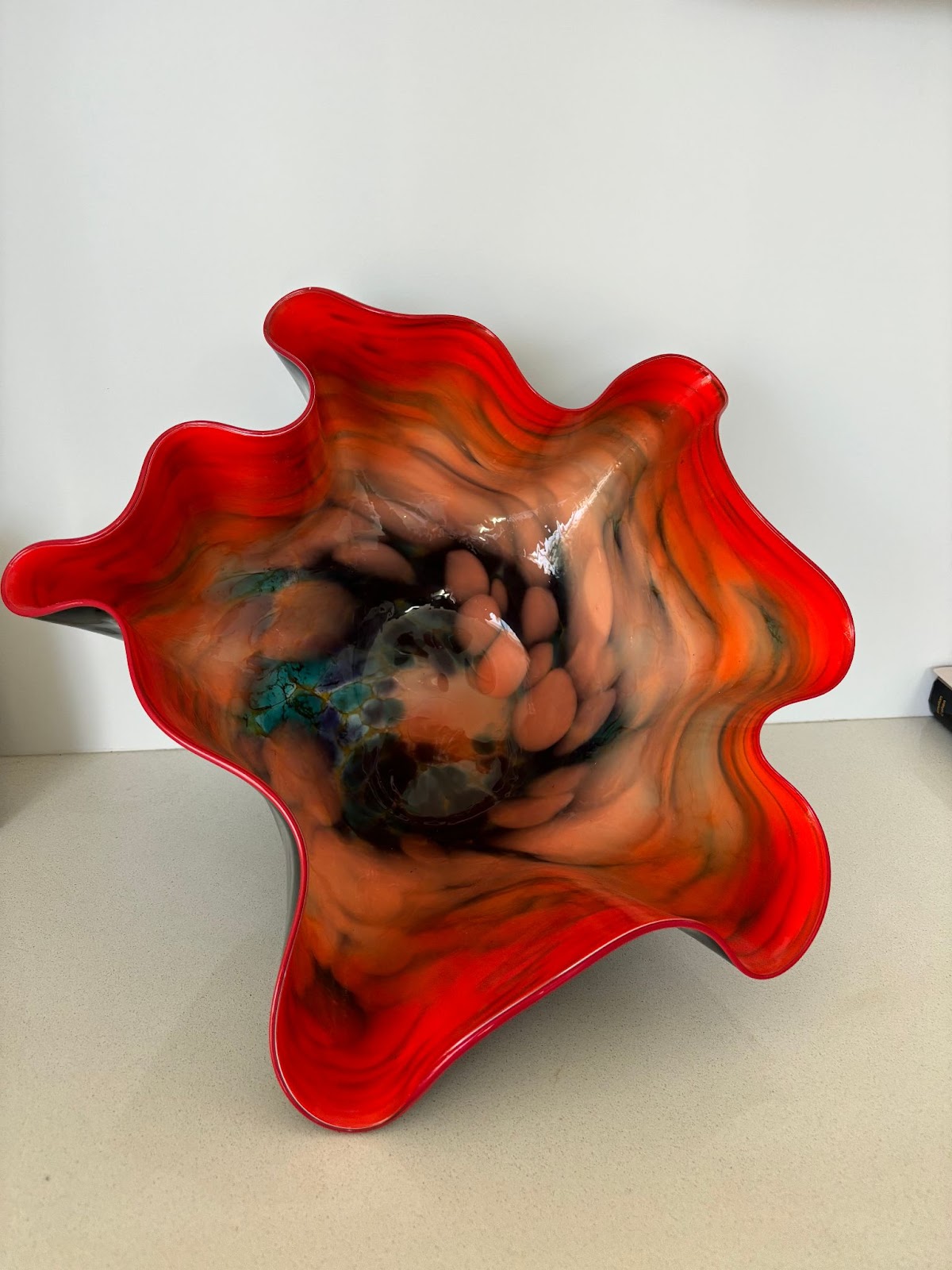
Dale Chihuly’s ”Indian Red Macchia with Lip Wrap” is a reprentitive example of the artist's work. The artwork is an average scale for the artist and is a prime example of the artist’s style, technique, and quintessential subject during the 1990s, making it desirable to collectors. 

Chihuly’s auction market is very strong with his highest auction record at $200,000 for very large works, but most works comparable works of this size are selling for lower. Gallery pricing is considered retail value and is higher than auction values. Works by Chihuly are in demand but works without serial numbers are listed in the lower range.

 See www.artandappraisals.com for more information on having your Dale Chihuly art appraised.

Thursday, August 4, 2022

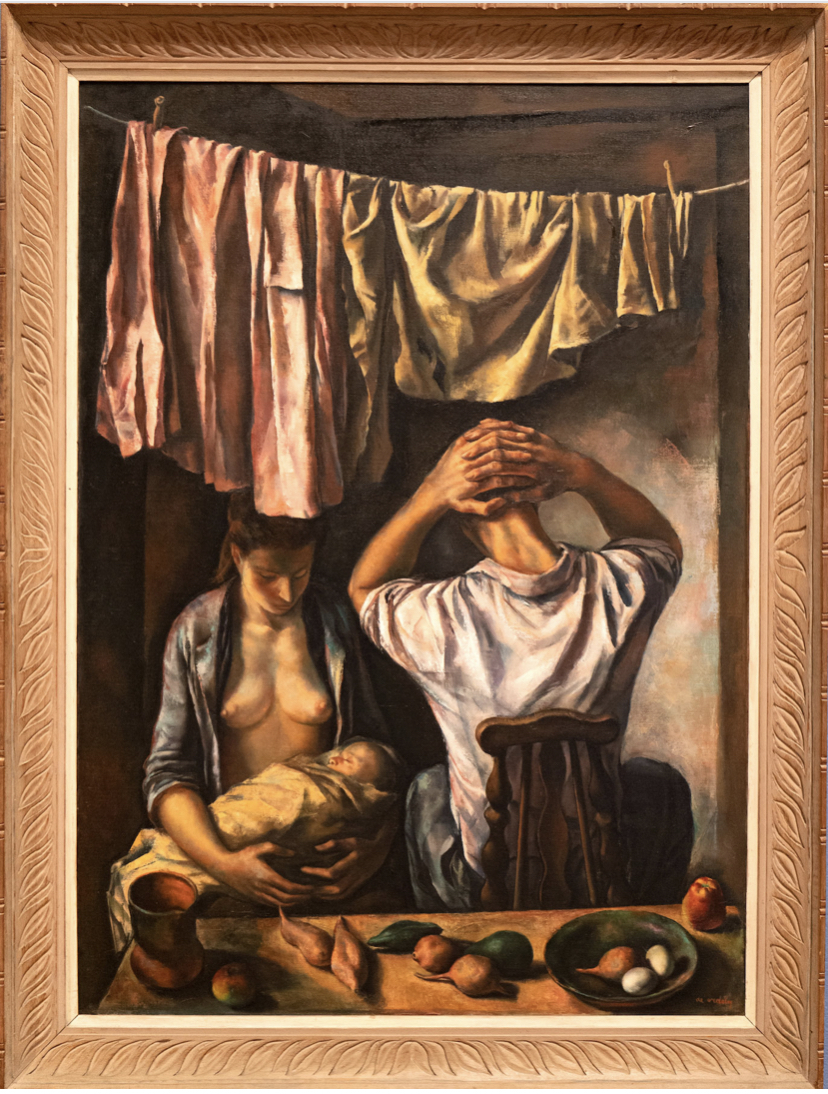
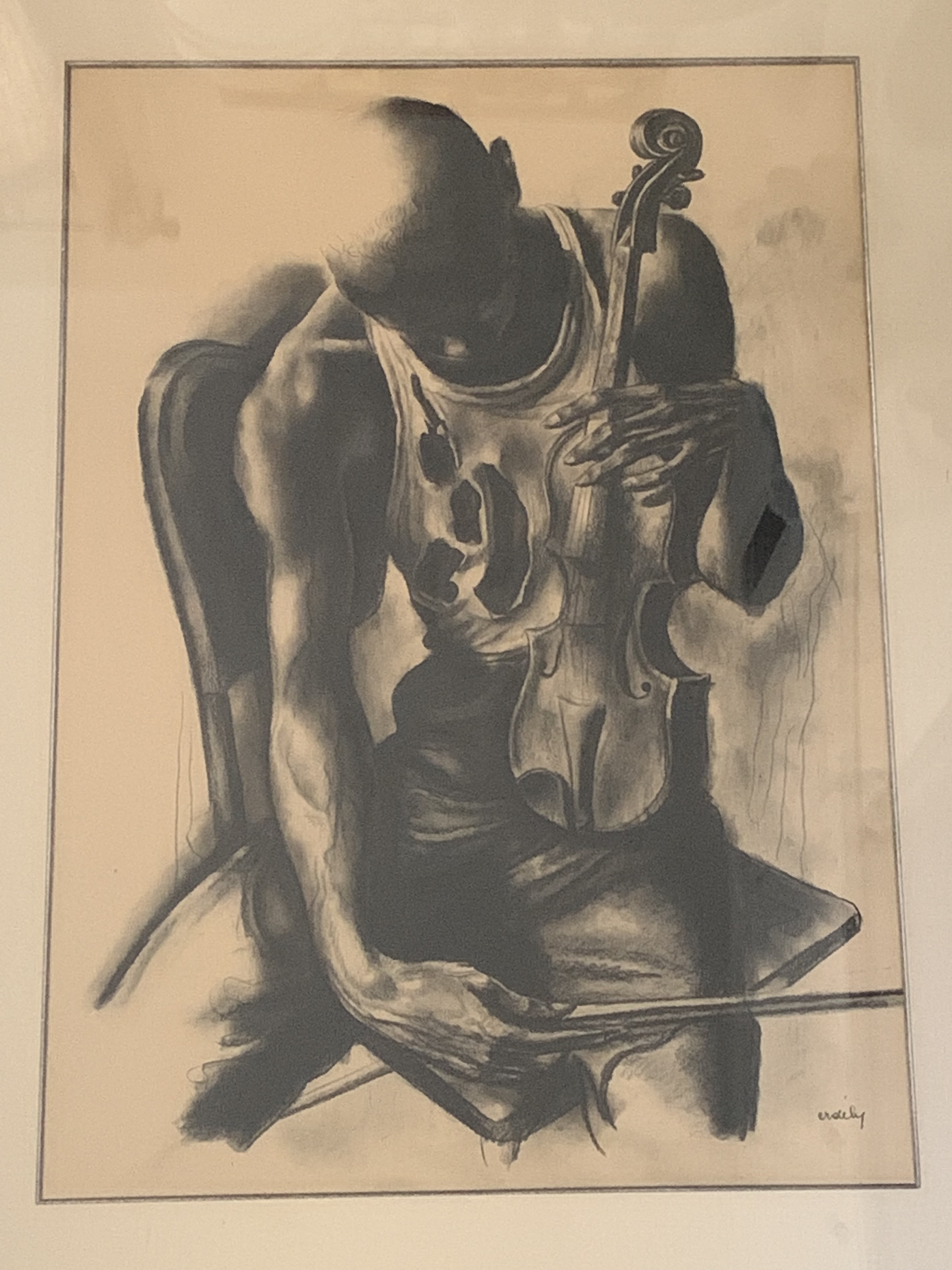
Francis DeErdely Major Exhibition and New Book

Francis DeErdely: Striking Figures is currently on view at the Laguna Art Museum. Curated by California art historian Alissa Anderson Campbell, this is the first major exhibition since the artist’s lifetime (1904-1959), including 36 paintings and drawings by Francis DeErdely.


This exhibition is the result of Anderson Campbell’s 16 years of research and work gathering the artist’s paintings and drawings from various private and public collections and institutions throughout the US. She is the leading expert and authenticator on DeErdely’s work.

An exhibition catalog, written by Anderson Campbell has been published by Laguna Art Museum to accompany the show and is the first major biography on Francis DeErdely. Anderson Campbell conducted her research at the Smithsonian Archive of American Art and throughout California in 2006.

It is published by the Laguna Art Museum (2022).

For more information on Francis DeErdely see Anderson Art and Appraisals. For more information on the exhibition or Alissa Anderson Campbell’s lecture “Focus on the Figure” 


To buy the exhibition catalog, see the Laguna Art Museum’s website.


© 2022 Alissa Anderson Campbell. All rights reserved. No portion of content from this website may be reproduced, stored in a retrieval system, or transmitted in any form or by any means, electronic, mechanical, photocopying, recording, or otherwise, without written permission of the owner of Anderson Art and Appraisals." © 2022 Alissa Anderson Campbell. All rights reserved. No portion of content from this website or essay may be reproduced, stored in a retrieval system, or transmitted in any form or by any means, electronic, mechanical, photocopying, recording, or otherwise, without WRITTEN permission of Anderson Art and Appraisals."


Sunday, February 14, 2021

Women Artists of California: Leslie Buck

“Jimson Weed” Oil on Canvas : 24" H x 20" W, circa 1930
(image courtesy: Anderson Campbell Art & Appraisals)

Leslie Buck was an accomplished California artist known for her still life’s and scenes of the American West. Her artist husband, Claude Buck, is perhaps better known, although Leslie Buck produced a significant and accomplished body of work. Many women artists such as Lee Krasnow, Helen Frankenthaler, Helen Lundeberg, and Jessie Arms Botke, were overshadowed by their famous male counterparts. But now, more is becoming known of these equally if not more talented artists. In the art market many works by these women are still undervalued. Leslie Buck is one of those artists.

Leslie Helen Binner Buck (1907-1991) was born in Chicago in1907. She began her art studies at the prestigious School of the Art Institute of Chicago. It was here where she met Claude Buck whom she would marry in 1934. Claude Buck had attended  National Academy of Design and was taught by artists  Emile Carlsen, George deForest Brush, Francis Jones, and Kenyon Cox. Buck had also traveled to Munich and was exposed to much of the modernist and surreal movements of Europe. Claude implemented Surrealist scenes in many of his paintings. 

Leslie Buck loved traveling in the Western part of the United States, painting still lifes and Native American subjects. Leslie Buck’s “Jimson Weed” is a characteristic still life but with a unique modern sensibility. The Bucks live in Santa Cruz, CA near San Francisco in 1943 where they lived and painted for nearly 20 years. In 1959 Leslie Buck moved to Santa Barbara where she lived until her death in 1991.

Buck’s work is included in a recent book on California women artists entitled: Emerging from the Shadows by Maurine St. Gaudens. For more information on Leslie Buck please visit www.artandappraisals.com

Tuesday, December 17, 2019


Still Life with Frying Pan and Red Cabbage 1979 
Image: © The estate of Louisa Matthiasdottir
I recently appraised an interesting painting by the artist, Louisa Matthiasdottir, which was inherited by client’s parents who lived in New York City in the early to 1950’s.

The prices for modern paintings by women artists have been steadily increasing. While historically, works by their male male counterparts have always been more valuable on the art market, that is changing. Paintings by Helen Lundeberg, Emily Carr, and Georgia O’Keeffe demand some of the highest prices in The American art.

Louisa Matthiasdottir was born in Reykjavik, Iceland. She became known for her striking portraits, self portraits, still lifes, interiors, and Icelandic landscapes, all distinguished by their simple, geometric shapes and flat planes of crisp, bold colors.

She came to New York in 1942 and had her first solo show at the Jane Street Gallery in 1948. Shortly after her arrival in the United States, she met Leland Bell, whom she married in 1944. Sometimes they had double exhibitions together, and both showed at Robert Schoelkopf Gallery where she had seventeen solo shows between 1964 and 1991. (Source:  Askart.com)

Louisa Matthiasdottir’s uses a palette of tones of grey, white, and greens. Characteristic of Matthiasdottirs’s paintings, “Still Life” is a realistic, yet modernist depiction of a classic still life for which the artist is best known. She also painted horses. Her swift brushstrokes and shadowing create a representative image, yet use some modernist elements of color and flattening.

Matthiasdottir has a body of work and is acknowledged by the fine art community as an important and valuable artist. This painting is representative of her mid-career style for which she is well know. A recognizable still life such as this would inspire a competitive demand on the market, especially for a work of this condition, quality by the artist.  

The scarcity of Matthiasdottir’s work to the market, as well as the fact that this piece is part of a significant private collection (not exhibited in many decades), makes for a strong market. The painting is mid-size in scale, is in excellent condition, and is a recognizable subject. Matthiasdottirs’s values have been steadily rising in value over the past 20 years. 

Matthiasdottir’s work has been auctioned approximately 25 times in the past 20 years. Currently the highest auction record for the artist is $43,750 for “Three Horses “ (high auction price date 6/13/2017) and “Still life with Chinese eggplant and squash” (auction on 8/22/2018). Both of these work were more modernist in style than the appraised work. Most of Matthiasdottir’s artworks sell for an average of $5,000-$8,000. Gallery pricing is up to $40,000.

Saturday, September 9, 2017

Women of Medieval Art at the Getty

A most interesting exhibition is closing soon at the Getty Center in Los Angeles on September 17th.
Titled "Illuminating Women in the Medieval World," makes use of the Getty's expansive collection of illuminated manuscripts and Medieval texts to explore the lives of women long ago. As in today's world, women's lives in the Middle Ages were varied -- reflecting difference in religious, geographic, and financial circumstances.
Saint Anne Teaching the Virgin to Read from a book of hours, about 1430-40, France or England, Master of Sir John Fastolf. Image: The J. Paul Getty Museum

As an art appraiser and art historian I have a particular interest in women in the art world, particularly in California art. This is an interesting and very old account of such an important role women played in the formation of art and storytelling. As the exhibition catalog describes, "this exhibition presents the biblical heroines, female saints, and pious nuns who embodied ideals of proper behavior, as well as figures who strayed from the path of righteousness."*

What is perhaps even more fascinating are the the manuscripts made by women. Some important texts were commissioned by wealthy women patrons and others were painted (illuminated) by women themselves. There was duchess as well as a middle-class woman who commissioned some of the manuscripts. An entire group of nuns at a Medieval monastery commissioned a series of manuscripts for their personal use.

Imagining how difficult it would have been for females to make their way in a the Medieval world is fascinating, much less working in a field dominated by men. This revolutionary exhibition helps us better understand how women working in the shadows achieved remarkable beauty and contributed the history of book production.

*Sciacca, Christina. Illuminating Women in the Medieval World. The J. Paul Getty Museum. 2017.

Sunday, March 5, 2017

A New Book on Francis De Erdely: Call for Paintings and Drawings

Francis de Erdely, Day’s End, c. 1947 (Courtesy: Laguna Art Museum)

As an art historian and writer, my focus has been primarily on California Art. While in graduate school, I realized how little scholarship had been written on artists working on the West Coast, a major art center of the mid-century. It became my interest to research and write about the art of Southern California for my thesis. I choose to document the painting of Francis de Erdely.

*My thesis is now being published as the first major biography on the artist, Francis de Erdely. We are in the process of locating ALL KNOWN paintings and drawings by De Erdely. If you have a work by the artist (or know of someone who has one), please contact me directly.

Francis De Erdely (1904 - 1959) was born in Hungary by the name Ferenc Erdelyi. Formally trained and having studied the great artists of Europe, De Erdely established himself as a respected young artist. Traveling throughout Spain, De Erdely's was strongly influenced by the elongated, sinuous, figures of the artist, El Greco. After creating controversial drawings documenting the Spanish civil war, the politically critical artist came under the scrutiny of the Fascists. He was soon forced to flee Europe during the 1930s and moved to New York City and, briefly, Chicago.

Eventually he made his way to Southern California where he settled. As an American artist now, De Erdely painted traditional subjects such as portraits to make a living. He was also one of many immigrant artists who made their way to Southern California, a beacon of artistic innovation and collaboration of the time. California had already been rich in a history of Spanish and Mexican culture. During the 1800s it also became an influential center of American art, specifically California Impressionism. Many art schools had been formed in Southern California, including Chouinard Art Institute, Otis College of Art, and USC among others. This attracted teachers and artists from around the world.

De Erdely became one of mid-century California’s most influential modernist painters and teachers.
While De Erdely was classically trained artist, throughout his career he remained committed to painting the figure. His portraits of migrants, gypsies, laborers, and dancer were painted as a modern commentary about the joys and plight of the human condition in Southern California. His works remains as salient today as when it was created a half century ago.

ART of Southern California in Art History

There is a growing movement of interest on the art of Southern California, including the major 2002 exhibition, Pacific Standard Time, organized by the Getty Museum. This is one of most exciting exhibitions ever organized and centered around the art of Southern California.  Pacific Standard Time developed into a collaboration amongst more than 60 museums and cultural institutions across California, highlighting the work of some artists who hadn't been recognized since the 1940s and 1950s. Viewers were able to see paintings by extraordinary but lesser known artists like Henry Lee McFee, Bentley Schaad, Millard Sheets, and Sueo Serisawa.

Culminating in a series of top notch exhibitions at major museums, the exhibition called Pacific Standard Time: Art in L.A. 1945–1980 were on display from October 2011-April 2012 across Southern California. The revolutionary collaborative exhibition inspired more than 40 publications to document Los Angeles' impact on art history during the modern and post-war years. 

Pacific Standard Time: Art in L.A. also garnered international press and spurred other offshoot exhibitions at galleries and institutions across the world. Los Angeles' art historical significance had finally begun to be recognized. Currently a continuation of Pacific Standard Time is being organized the Getty, called La/La: A Celebration Beyond, which will continue to spread the word about California's impact on art history.

Another exciting addition to California art history is new museum called the Hilbert Museum of California Art which has one of the strong collections of California art, second only to The Irvine Museum

Thursday, January 12, 2017

Art as Investment?

Many people are interested in investing in art instead of the stock market. When someone wants to build an art collection as investment, it is important to stress the risks involved. Since the 1800s art dealers have been advising clients to buy the art they love. This is the single, most important element of collecting. If a piece loses its market value after purchase, the buyer still has a personal attachment to it. Buying what you love is the safest way to invest in art.

Building an art collection from a pure investment position creates an entirely different set of issues. Some economists suggest art investment can be more lucrative than the stock market, but the mercurial trends of the art market can make art a riskier asset than stocks.

In 1637 a Dutch event called tulip mania took place, where prices for rare flower bulbs of the recently discovered tulip reached extraordinary heights and then suddenly collapsed. In the spring of 1637, a single tulip bulb sold for approximately ten times the annual income of a working craftsman. It is generally considered the first recorded economic bubble.

The tulip was unique from other flowers known to Europe in the period, with a saturated petal color unknown to mostly flower collectors. The nonpareil tulip became a status symbol and coincided directly with the rise of new trade fortunes of Holland's elite.

By 1636 the tulip bulb became the fourth leading export product of the Netherlands, after gin, herrings and cheese. The price of tulips skyrocketed because of speculation in tulip futures among people who never saw the bulbs. Many men made and lost fortunes overnight. The collapse began in the town of Haarlem when buyers suddenly did not show up for the routine bulb auction.

In the art market, especially with contemporary art, hedge fund managers like Steven A. Cohen have stimulated a heightened interest in art as investment. As a collector, his interest in specific artists has built a confidence in the art market at large.¹ Some suggest that his interest in certain artists has validated the value of comparable artists and even for art for the art market itself. The high prices he has paid for his collection appears to have mostly turned into a profit. Purchases of recognizable works by famous artists for high prices is more of a traditional collector's tactic, but gambling on the long-term profit from a lesser known contemporary artist may provide larger gains.

Economists like William Goetzmann, David Kusin, and Michael Moses have conducted studies evaluating the monetary gain for a collector using art as a primary investment. They attempt to compare the gain from stocks versus that of art by analyzing artworks which sell multiple times at auction. Goetzmann says that indeed the rate of return for art exceeds the rate of inflation.² But the cost of selling art works is very high, which decreases profit. Also, the likelihood of a willing buyer willing is unpredictable, even with reliable auction records. Unlike stocks, art is not a liquid asset. 

Value is not determined by a large group of people, but instead by individual or group's changing taste. The selling price of a piece at auction is determined by the mood of one or two, single bidder, rather than multiple shareholders.

In her article "Art as an Investment," Wendy Cromwell discusses the difference between art investment funds and traditional collectors. She says, "Individual collectors are driven by passion, . . . informed about auction history, and they consider provenance and condition as important variables in determining what to pay for a work of art, whether privately or at auction." Collectors are typically educated about the artists whom they collect and which pieces are expected to hold value. They compile multiple factors into their buying approach.

Many art investment funds try to diversify their collection in a similar format as a stock portfolio. This model has worked for funds like the British Rail Pension Fund who make a 12% profit by controlling the slow sell off work from a variety of art styles.³ Other investment groups such as the Fine Art Fund are following the same model.

Investment funds often try to collect iconic works by famous artists, rather than pieces they love, to insure their financial gain. This is another risky move. As Cromwell suggests, the provenance of a thoughtful collector's vision often adds value to its marketability. A random selection of paintings that is sitting in a vault might be viewed negatively, as commodities, rather than unique pieces of art.

For a collector, Moses suggests buying lower-priced art, with room for growth. Contemporary art can be risky. When asked what he would invest in, Kusin would buy modernist drawings and sculpture maquettes in order to build a strong collection with a focus There was a decline in value in the 1990s, Goetzmann says pre-war and post-war art but it remains a good investment because the works are "high beta." The means the art genre swings consistently both upward and downward in value.  It is risky but has a strong profit potential.

Collectors are now using art as collateral loans from companies like Art Capital Group Inc. or Citigourp Private Bank, which is an interesting concept. But, this often means a collector would be putting a treasured piece of art into a warehouse for ten years rather than enjoying its beauty. This is considered a preposterous idea by many in the museum and art historical fields. 

Although one can research auction records through a database like the Mei/Moses Index, the auction market is difficult to gauge. Moses says, "The S&P 500 and the Dow 30 are broad measures of how those markets are doing. We need the same thing for art." But galleries do not report such data, making art investment much less trackable than the stock market. Also, in an auction, a piece that sold for a record-breaking price might not actually be worth that price. 

Value can be constructed by a set of collectors who falsely bid up the price in order to insure their own interests in the artist. The results can also be based on the mood of the bidders rather than concrete, reliable data. Thus, a collector cannot insure that their piece of art will sell for its predicted price.

In Finken's article, Goetzmann also sees a discrepancy between the stock market and the art market in terms of a public marketplace. Unlike the visible, transparent public realm of the stock exchange, art buying is conducted in private. The choice of pieces is often minimal and collectors must rely on dealers and specialists for access to. This narrows the market and controls supply and demand.=

These economists suggest that art investment can be lucrative but perhaps riskier than stocks. Art collecting has to be done in a strategic manner, as consistent data in the art market does not always exist. 

If advising a collector who wants to build an art collection, it seems best that art exist only as a portion of one's investment rather than the main investment. Art held for a long period of time seems to accrue the highest value, assuming the artwork is kept in proper condition. The traditional model of collecting art one loves still seems to function best. If it rises in value, that is only icing on the cake.


¹ Landon Thomas Jr. and Carol Vogel. "A New Prince of Wall Street Uses His Riches to Buy Up Art." The New York Times, March 3, 2005
² Jori Finkel. "Painting by Numbers." Art and Auction, April 2004. Pp. 77 - 83
³ Wendy Cromwell. "Art as an Investment." Art on Paper, March/April 2005

Thursday, October 13, 2016

Painting with Light: Belle Goldschlager Baranceanu


I recently discovered the artist Belle Goldschlager Baranceanu. Raised by her grandparents on a farm in North Dakota, the young artist attended the Minneapolis School of Art in Minneapolis. She studied under the artist Anthony Angarola, who would become her fiançe. Before the couple Were able to marry, Angarola died in 1929. In 1932 changed her name from her father's surname Goldschlager to her mother's maiden name, Baranceanu.

In 1924 Baranceanu relocated to Chicago, where she studied at the Art Institute of Chicago and began to develop a distinctive abstract realist style. She soon made her way West, where she was transfixed by the light of California. She settled in San Diego, where she did murals for the Public Works of Art Project at the La Jolla Post Office and Roosevelt Jr. High School. Her palette was imbued with bright colors and modernist broken planes of color reminiscent of the Fauvists.

Most interesting was her ability to paint portraits in a distinctive technique. Beautifully meticulous, yet with a modern sensibility, her figures represented mid-century California.

Belle Goldschlager Baranceanu's paintings range from $2,000-$5,000 at auction. Like many women artists she is undervalued in the art market, compared to male artist of the same caliber.

Sources: http://www.sdnews.com/view/full_story/9634637/article-Speaker-describes-the-creator-of-a-modernist-masterpiece?instance=update1

Wednesday, July 13, 2016

Erle Loran: Bringing Cezanne to California

"Farmhouses" oil on canvas c.1930s (courtesy: askart.com)

With so much scholarship about East Coast American artists I'm always seeking the California and Western artists who changed the course of American art. Erle Loran (1905-1999) was a most interesting artist of the modern period. Loran published the book Cézanne's Composition, exploring the artist's approach to form and space during a period when Post-Impressionist art still perplexed the American public. The important publication explained Cézanne from a purely aesthetic point of view. Loran's book became a staple amongst California artists, teachers, and students. It was used by important universities who were beginning to teach modern art.

Loran was born with the name Erleloran Johnson. And as a young man attended University ofMinnesota from 1922-1923, transferring to the the Minneapolis School of Art where he graduated in 1926. Through the Chaloner Foundation, Loran earned a scholarship to study in Europe. He became fascinated by the artist Paul Cézanne. Erle Loran explored the French countryside around Aix-en-Provence, France, to document the scenes Cézanne used in his paintings. Loran even was said to have lived in Cézanne's studio there.

Loran returned to the United States in 1930, where he briefly worked in New York publishing art criticism and painting. He returned to Minneapolis where he became an artist of the Public Works of Art Project, a federal program that commissioned artists during the Great Depression. In the mid-1930s, Johnson changed his name to Erle Loran. In 1936, he was appointed to the faculty at the University of California, Berkeley. Loran became the leader of an artist group known as the "Berkeley School." He was influenced by Asian, pre-Columbian, American Indian and African tribal art.

In 1943 Loran wrote his important book on Cezanne. His pupils at Berkeley included Richard Diebenkorn and Sam Francis. In 1954 Loran studied with Hans Hofmann, the painter and theoretician of modern art in New York.

Loran retired from the University in 1972. He suffered a stroke in Berkeley and died at age 93. His art work was collected by the Smithsonian Institution, Washington, DC, the Los Angeles County Museum and the San Francisco Museum of Modern Art.

*The Hilbert Museum of California Art at Chapman University's exhibition has an exemplary work by Erle Loran currently on view.

Saturday, January 16, 2016

Anton Refregier: Controversial Mid-Century Modernist Challenges California History

Anton Refregier was one of the most interesting and controversial California modernists of the mid-century. Most of his paintings make a social commentary about the world around him. Utilizing broken planes of color and fractured lines, his modernist style often replicated the tone of the subjects he was painting.

Born in Moscow, Russia in 1905, Refregier emigrated to New York City in 1920. Soonafter he received a scholarship to the Rhode Island School of Design in 1921, afterwhich Refregier moved back to New York. Refregier was employed as an artist to  interior decorators, creating replicas of François Boucher and Jean-Honoré Fragonard paintings. Refregier returned to Europe in 1927 and visited to Munich where he studied under the modernist Hans Hofmann.
Anton Refregier "San Francisco 1934 Waterfront Riot", 1949 Color Screenprint (Collection of DeYoung Museum)

This print "San Francisco 1934 Waterfront Riot" by Refregier was recently appraised on Antiques Roadshow for $3,000-$5,000.

One of Refregier's most interesting commissions was the Rincon Annex Post Office in San Francisco. Commissioned in 1943, it was the last year of the Federal Art's project. In fact, the murals were not even painted until after World War II was over. Since it was an obselete notion to illustrate how hard work would end the economic depression --- Refregier choose to depict California's history, ugly bits an all, including the great Earthquake, the Goldrush, corrupt leaders, anti-Chinese riots, and the Bay Area's waterfront strike of 1934.

The mural was so controversial, that many people including former President Richard Nixon protested to have the work removed. They claimed it had a communistic tone and “defamed pioneers and reflected negatively on California's past.” Eventually the mural was saved, thanks to a group of artists and museum curators. 

Refregier's "Ploughed Under" an oil painting from 1935 serves as one of the artist's most important Depression era paintings. Depicting a Dust Bowl era farmer devastated by his bleak landscape, the painting represents the Depression-era experience. The shape of the broken and dilapidated house is mirrored by the shape of the farmer in his tired, worn overalls.


Wednesday, November 4, 2015

Anna Skeele: California Artist and Modernist of the Southwest

Rancho Church, New Mexico 1930 Oil on canvas

I recently discovered a most interesting California artist by the name of Anna Skeele (1896-1963 Monrovia, CA). Skeele was born in Wellington, Ohio and eventually made her way to New York City to study at the Art Students League of New York City under Charles Hawthorne and Frederic Bridgman.

Skeele, she also travelled to Europe where she became exposed to modernism at the Académie de la Grande Chaumière and with André Lhote in Paris. In a mostly male artist dominated feel, she travelled to the Royal Academy of Arts in Florence, Italy where she studied the history of painting.

Skeele eventually made her way west, moving to California in 1912. Here she took art classes at the California School of Fine Arts under the apprenticeship of Armin Hansen in Monterey, California. Skeele eventually began teaching at Pomona College. Also know as Katherine Skeele Dann, she married fellow artist Frode Dann.

The mid-century in Southern California produced a vibrant school of modern artists like Skeele. Because of the number of imporant art school in the area -- artists were able to innovate modern art techiniques and styles unlike anywhere else in America. Artists like Anna Katharine Skeele, Helen Lundeberg, Henrietta Shore, Henry Lee McFee, Richard Haines, among others developed a distinctive figurative modernist school of painting.

Skeele favored figurative art but painted in a modern style in which she utilized a vibrant Fauvist palette, cubist forms, flattened panes of color. Reminiscent of artist peers of her time period Diego Rivera, Thomas Hart Benton, and Georgia O'Keeffe -- Skeele developed a similar but signature style unique to her

Anna Skeele spent quite a bit of time in the Southwest -- and she became fascinated by the people and place. Some of her most striking paintings often depict Native Americans in and around New Mexico.
Image: Courtesy of Laguna Art Museum. Anna Skeele "Rancho Church, New Mexico" depicts San Francisco de Asis Mission Church in Rancho de Taos, built between 1772 and 1816 by Franciscan fathers. It was a favorite subject for artists who came to the area, among them Ansel Adams and Georgia O’Keeffe. Skeele emphasizes the massiveness of the structure, which fills the composition and dwarfs the figures nearby. The fluffy white clouds form a halo around the church.

Sunday, May 24, 2015

Henrietta Shore: California Modernist

Henrietta Shore Huntington Art Collection
As an art historian and appraiser with a specialization in California art -- I am always looking for paintings by interesting women artists during the modern period. One of my favorite modernists is Henrietta Shore.

Henrietta Mary Shore (1880-1963) was born in Toronto, Canada. When she decided to be an artist, she went to New York City to gain an art degree. She attended The Art Students League and learned American realist painting under the mentorship of the great artists Robert Henri and William Merritt Chase. Shore also travelled to London to attend Heatherly Art School as a student of John Singer Sargent. She learned her foundations of art from some of the very best 20th century American artists.

Shore was a founding member of the New York Society of Women Artists. But rather than continuing with realism she began exploring modernism. Often likened to Georgia O'Keeffe of the same period, she had a style that also used bold colors, sinuous lines and foreshortening. Henrietta Shore also happened to be interested botanical studies. Her work is now known as Abstract Realism.

In 1913, Shore was bewitched by Los Angeles and moved there. She was a founder of the Los Angeles Society of Modern Artists. West Coast modernists of the period included Mabel Alvarez, Belle Baranceanu, Elanor Colburn, and Helen Lundeberg, who explored technique, color, and composition-- but continued to paint realist subjects. Shore won a silver medal at the 1915 Pan-American Exposition in San Diego. She and her colleague, Helena Dunlap partook in a two-person exhibition at the Los Angeles County Museum (LACMA).

Shore’s had earned a strong reputation as an artist and a retrospective of her work was held at the Worcester Art Museum in Massachusetts. In 1924, she was chosen to be one of 25 American women represented women in Paris' exhibition. She also traveled to Mexico where she painted portraits of the famous artists Jose Orozco, Jean Charlot, and others. 

Upon returning to California, Henrietta Shore met photographer Edward Weston who made series of photographs based on Shore’s paintings. Shore eventually settled in Carmel, CA and continued to paint. During the Great Depression, Shore worked for the Treasury Relief Art Project and completed murals at the Monterey post office and another at the Santa Cruz post office.

Contact us with any artworks you think might be paintings by Henrietta Shore.

Wednesday, May 6, 2015

Robert Henri and his California Sojourn


The paintings of Robert Henri bewitched me into the world of art history as a young student. From his opulent portraits of wealthy industrialists to gritty depictions of New Yorkers like the sensuous Salome (below) his work beguiles viewers with truthful portrayals of turn-of-the-century America.

Copyright: Salome, 1909, John and Mable Ringling Museum of Art, Sarasota, Florida

Robert Henri was educated at the Pennsylvania Academy of the Fine Arts in Philadelphia and eventually became a teacher and trailblazer of American Realism painting. Henri became known as the father of the Ashcan School of painters, a group of artists who included John Sloan, William Glackens, George Luks, and Everett Shinn. Known as The Eight, they rejected the confines of the National Academy of Design began painting images of real life in New York and Pennsylvania.

Copyright: Gertrude Vanderbilt Whitney Whitney Museum of American Art:

In 1888 Henri travelled to Europe where he was exposed to the subject, colors, and minimalism of the modernists. After have establishing himself as an esteemed portraitist, Henri travelled to California in 1914 with his wife, the artist Marjorie Henri. 

The recent exhibition at the Laguna Art Museum focuses on this period of work and is one of the most interesting exhibition I have seen in a long time. Robert Henri's California Realism, Race, and Region 1914-1925 explores Henri's painting done in La Jolla, Los Angeles, and San Francisco. 

Henri was tantalized by the region. This is most glaringly seen in his inspired palette of bright yellows, vibrant greens, and sparkling blues -- instead of his trademark oil paint done in browns and black used in his East Coast works. 

What is most interesting about Henri's West Coast work is his pursuit of real-life characters for his portraits. Instead of painting wealthy patrons he was intrigued by everyday people -- like the local Mexicans, Native Americans, African Americans, and Chinese of Southern California.

Copyright: Sylvester Private Collection 
Other artists in the Los Angeles area were also seeking Social Realist subject matter. Artists like Francis De Erdely, Richard Haines, and Mabel Alvarez were interested in depicting intriguing people of the area -- including dancers, workers, immigrants, and minorities. Artists like these as well as Henri wanted to capture the character and personality of this people -- which he does masterfully with paintings like Sylvester Smiling and Po Tse (Water Eagle).

Copyright: Tom Po Qui Denver Art Museum 
A most interesting part of the exhibition were the missing paintings by Henri. Mounted on the wall of the Laguna Art Museum were black and white photographs of paintings stated as "location unknown." As an art appraiser and historian it is interesting to think about where these paintings might be . Perhaps they are burned, lost, or hidden in the clutter of someone's basement. These might be unsigned works so a collector would not know whether it was a Henri painting. The lost painting have titles including Sylvester, Mexican Man, Mexican Woman, Ramon, Yen Tsidi, Ground Sparrow, and Machu.*

Robert Henri's California Realism, Race, and Region 1914-1925 is a must see. The Laguna Art Museum (which also has a wonderful permanent collection to note) has the Henri exhibition up until May 21, 2015. As stated in the worthwhile exhibition catalog by Grand Central Press, "Henri’s eagerness was rooted in his quest for new settings and fresh subjects. “I am now quite convinced that San Diego is one of the most interesting and beautiful places in the world and we shall head that way and will not be convinced otherwise until we have seen the place and have been turned away.”"

NOTE: Readers, if you have seen these paintings or think you have a painting by Robert Henri, please contact us.


Saturday, February 28, 2015

Borrego Art Institute Plein Air Invitational


I was recently asked to serve as juror of the upcoming Borrego Art Institute's 2015 Plein Air Invitational. While the Borrego Art Institute is only two years old, it is already attracting visitors from all over the world. Sunset Magazine's March 2015 issue highlights the desert town as well as the 2015 Plein Air Invitational.

Every year, 15 artists are asked to visit Borrego Springs for an entire week of painting. Artist will paint outdoors all day long -- and present works at the end of each day. They will hang in the gallery of the Borrego Art Institute and later be for sale. The artists included in the competition are Santa Barbara artist Marcia Burtt as well as Simon Addyman , Josh Clare, Janice Druian, Stuart Fullerton, Paul Kratter, Patty McGeeney, Clark Mitchell, Rita Pacheco, Dot Renshaw, David Solomon, Stock Schlueter, Victor Schiro, Toni Williams, James Wisnowski.

As an art appraiser, I have never had the opportunity to serve as juror of an art competition. Specializing in American art with a focus on California Modernism, I am usually asked to examine midcentury paintings or very old artworks. It is an exciting proposition to look at painting that are not yet dry.

I will judge the artworks in the exhibition based on stylist merit, composition, and technical prowess. Borrego Spring landscapes are known for their extreme beauty and the artists should have plenty of inspiration -- and I have a feeling viewers shall be inspired as well.


Monday, February 10, 2014

Pacific Northwest Artist David Marty

A reader submitted this painting by Washington artist David Marty. He purchased it last October at a thrift store in Palo Alto, California for $15!

David Marty (1951- ) was born in northern California. He studied at Art Center College of Design, Biola University, and the Scottsdale Artists School. His landscape paintings are influenced by the French and California Impressionist style. His works attempt to capture atmospheric contrasts of light and shadow.

After a bit of digging in my appraisal auction record databases, I found that David Marty’s painting have sold for as little as $375 and as much as $7,500. While auctions in general tend to be mercurial, this is a wide range of pricing for an artist. In the case of Marty it appears his later, more detailed, tonalist paintings demand the highest prices -- while his early work sell for less.

Although undated, this painting is likely an early work by the artist. It depicts a dark forest likely in the Pacific Northwest, where Marty has spent most of his life. Although well-painted, it does not have the luminosity that appears in some of Marty’s later works. He is well-known for his skill at painting atmospheric skies, which unfortunately this painting does not have.

Still, a painting of this quality in excellent condition and of this large size (20 inches by 20 inches) by Marty would likely warrant an auction estimate as high as $1,000-$3,000. A comparable painting entitled “Golden Touch” by Marty recently sold at auction in 2013 for $3,250. 

I was also able to find galleries selling Marty’s work. Retail prices can be as much as 50% higher than auction values, and would likely be priced on the higher end if sold in a gallery.

If this were appraised for resale purposes it would be estimated to have a Fair Market Value of approximately $1,500-$2,000. A treasure indeed!

*Fair Market Value Fair Market Value is defined as “the price at which the property would change hands between a willing buyer and a willing seller, neither being under any compulsion to by or to sell and both having reasonable knowledge of relevant facts.”

**This is not an official art appraisal. It is for informational purposes only. An appraisal is a legal document, generally for insurance purposes, written by a qualified expert who has examined the artwork in-person and is paid for by the owner of the item. An appraisal involves an extensive amount of research to establish authenticity, provenance, composition, method of construction, and other important attributes of a particular object. This article is restricted-use and is intended for educational purposes only.

-----
Alissa Anderson Campbell is an art appraiser for Anderson Shea Art Appraisals. She specializes in appraising European and American art for insurance, resale value, estate, tax, and charitable donation. Campbell is a member of the International Society of Appraisers. www.andersonshea-artappraisals.com


Tuesday, November 26, 2013

Edgar Ewing Depicts Ancient Subject for Modern Painting

Edgar Ewing "Vesalius as a Naval Surgeon" Oil on masonite

This month's artwork selection is by California artist Edgar Ewing (1913-2006). Our local reader bought “Vesalius as a Naval Surgeon” on eBay for $110. The size 12” x 6” painting is an oil on board.

Edgar Louis Ewing was born in Nebraska. As a young art student, he attended the University of Chicago, where he was given an art fellowship to study in Europe. Ewing was heavily influenced by his travels through Europe was especially intrigued by the history of Spain, Greece, Rome. Ewing eventually moved to the West Coast where he began teaching at the University of Southern California. He painted and taught alongside many other painters of the mid-century.

This portrait is part of the well-known Vesalius Series by Ewing. Andreas Vesalius was an anatomist, physician, and author of the book on human anatomy entitled, De humani corporis fabrica (On the Workings of the Human Body). Vesalius is referred to as the founder of modern human anatomy.

It is claimed that in 1565, Vesalius performed an autopsy on an aristocrat in Spain while his heart was still beating. This was deemed so atrocious to Spain’s Emperor Charles V, that he condemned Vesalius to death.

The painting depicts an ominous five-pronged hook hanging above the portrait of Vesalius, who wears a traditional naval cap and coat. Ewing paints in his signature post-cubist style, deconstructing the forms. The palette of red and black reflect the dark subject of the painting.

In researching the appraised value of this painting, it appears Ewing’s work has sold for up to $5,700 at auction, but most paintings of this size have sold between $200-$400. His large masterworks are priced as high as $10,000 in private galleries.

“Vesalius as a Naval Surgeon” is in good condition with minor signs of dust but no abrasions or paint losses. In appraising this painting, an appraiser would consider the morbid subject which means it might only appeal to a small audience. This would limit the market value. If this painting were listed for sale in a gallery it would have an estimated Retail value of approximately $500-$700. A savvy, if sinister, investment indeed!

* READERS: This is not an official art appraisal. It is for informational purposes only. An appraisal is a legal document, generally for insurance purposes, written by a qualified expert who has examined the artwork in-person and is paid for by the owner of the item. An appraisal involves an extensive amount of research to establish authenticity, provenance, composition, method of construction, and other important attributes of a particular object. This article is restricted-use and is intended for educational purposes only. Any portion of this text CANNOT be reproduced or copied without the consent of the author.


Tuesday, September 3, 2013

A California Modernist Artist's Pilgrimage

A most interesting painting came along this month -- by California artist Richard Haines (1906-1984). It was purchased by a Santa Barbara art collector from an estate sale. She bought it for a whopping $1,000, just because she loved it!

After some research, I found that Charles Richard Haines was born in Marian, Iowa 1906 and studied at the Minneapolis School of Art. Like many artists he became involved in the New Deal government-sponsored art program and won nine mural commissions from the Treasury Department's Section of Painting and Sculpture between 1935 and 1941. The murals were primarily done in U.S. Post Office in the midwest. In 1941, Haines moved to Los Angeles, where he began teaching at two important art schools of the time, Chouinard Art Institute and Otis Art Institute.

Haines was a founding member of California Modernist style of painting and worked primarily as a painter. A prominent mid-century Los Angeles art dealer Dalzell Hatfield said Richard Haines's paintings “[capture] a meandering silence, a pause in time, a captive moment, all of which tend to reveal the spiritual values of humanity while depicting its physical form."

This painting entitled, “The Pilgrimage” depicts a group of religious figures walking through the desert. Nearly abstract in its decomposition (and subject), the artist appears to be influenced by both cubism and surrealism. The broken planes of color and unique palette of pink and brown give the painting a distinctive quality that is unique to Haines' work.

After a bit of art appraisal research, I discovered that few of Haines’ paintings have sold at auction. His works have sold up to $8,800 but most auction records indicate paintings selling between $500-$1,000 depending on subject, size, date, condition, and provenance. His strongest market is at auction but only a few galleries carry his work.

There are a number of artists like Haines who I appraise in and around Southern California. They were part of the California modernist artist group working during the 1940s-60s -- and their work is still undervalued. Comparable artists on the East Coast are demanding more than five times as much as these artists. Considering the skill, subject-matter, and style I believe it is a genre of work that will likely rise in value as more art collectors discover these artists’s work.

If this painting were appraised for auction purposes it would have an estimated value of approximately $800-$1,200 so our reader paid just about what it is worth on today’s market.

READERS: We need your submissions! Please email us a photo of your painting,  drawing, or sculpture for next month’s The Art Appraiser. Send the artist name, title,

Alissa Anderson Campbell is an art appraiser for Anderson Shea Art Appraisals. She specializes in appraising European and American art for insurance, resale value, estate, tax, and charitable donation. Campbell is a member of the International Society of Appraisers. Ph. 805.616.2781/www.andersonshea-artappraisals.com

* This is not an official appraisal. It is for informational purposes only. An appraisal is a legal document, generally for insurance purposes, written by a qualified expert who has examined the artwork in-person and is paid for by the owner of the item. An appraisal involves an extensive amount of research to establish authenticity, provenance, composition, method of construction, and other important attributes of a particular object. This article is restricted-use and is intended for educational purposes only.


Thursday, July 18, 2013

Samuel Thal: American Scene Painter

Samuel Thal "Farm" circa 1940s, Oil on canvas

This painting by American artist Samuel Thal (1903-1964) is was purchased by a local reader through an online auction in Connecticut. These days, it is easy for anyone to find artworks at online auctions throughout the world. Our reader bid on this painting without even seeing it! Although it was estimated to sell between $800-$1,200, she snatched it up for $500.

Samuel Thal was born in New York City in 1903, as the son of Russian immigrants. He grew up on a farm in Hadlyme, Connecticut and studied art at the National Academy of Design and the Art Students League. Thal spent most of of his life in Boston where he studied at the School of the Museum of Fine Arts and spent many years doing architectural sculpture. By the 1930s Thal was working as a full-time artist.

He also assisted in the establishment of the art education programs under the WPA Federal Art Project. Thal also taught life drawing classes at Garland Junior College in Boston, the Boston Architectural Club and the Boston Museum of Modern Art.

This painting, "Figure in a Landscape" is a signature painting for Thal, depicting a figure overlooking his farm. Like the American Regionalists and Ashcan painters of the 1930s and 1940s, Thal depicted images of everday life in America including cityscapes, landscapes, and figures. Thal’s realist style and loose, expressionistic brushstrokes can also be compared to the style of Van Gogh's early work.

After a bit of appraisal research, I discovered that a number of Thal’s paintings have sold at auction. His auction records range from $600-$4,000 depending on subject, size, date, condition, and provenance. His strongest market is at auction with only a few galleries carrying his work -- but retail prices could be up to 50% higher in a gallery setting.

If this painting were appraised for Insurance purposes it would have a Retail Replacement Value of approximately $2,000-$3,000. *Retail Replacement Value is defined as the highest amount in terms of US dollars that would be requireda to replace a property with another of similar age, quality, origin, appearance, provenance, and condition with a reasonable length of time in an appropriate and relevant market. When applicable, sales and/or import tax, commissions and/or premiums are included in this amount.

* This is not an official appraisal. It is for informational purposes only. An appraisal is a legal document, generally for insurance purposes, written by a qualified expert who has examined the artwork in-person and is paid for by the owner of the item. An appraisal involves an extensive amount of research to establish authenticity, provenance, composition, method of construction, and other important attributes of a particular object. This article is restricted-use and is intended for educational purposes only.

Tuesday, June 4, 2013

Local California Artist Barnaby Conrad


This painting by Santa Barbara artist Barnaby Conrad (1922-2013)was chosen this month for its local connection. Our reader bought the piece in May 2009 in Carpinteria, California. With an asking price sticker of $800, our reader was able to negotiate the price to $450.
Best known as a writer, Conrad lived an extraordinary life. Born in San Francisco, he studied Yale, University of North Carolina, and the University of Mexico (where he began bull fighting). He was a friend of Sinclair Lewis, John Steinbeck, William F. Buckley Jr. and Ray Bradbury, many of whom he painted. His portraits of Alex Haley and Truman Capote are in the National Portrait Gallery.
This whimsical painting entitled "Fish Diary" is watercolor, oil and collage. Conrad has playfully signs his name in the fishing license section of the painting, giving it a personal touch. This is an example of a trompe-l’œil painting, meaning “trick of the eye.” The style is meant to create an optical illusion where the subject appears in 3-dimensions. A popular style in 19th century Europe, the style is still used by contemporary artists.
Unfortuntately, Barnaby Conrad has virtually no auction market. With only two auction records that could be located, his paintings have sold at auction for $200-$300. An auction specialist would likely suggest a very low sales estimates of $100-$200 and hope that interested buyers would bid up the price.
            Conrad’s most common and strongest market appears to be in the regional gallery market of Carpinteria and Santa Barbara. The Palm Loft Gallery had an exhibition of his work in 2006. Currently, no galleries are selling his work. In valuing artworks, appraisers often consider the regional market of a certain artist. For instance, California impressionist paintings tend to sell for more in California, as one might expect.
Since many people knew Barnaby Conrad, his values would be higher in this area than in the general art market. He recently passed away which also tends to up the values of an artist’s work. Collectors would pay slightly higher retail prices than the auction records reflect. If this piece were appraised for Insurance, it would likely have a Retail Replacement Value of approximately $500-$600, which is close to what the buyer originally paid.
Retail Replacement Value is defined as the highest amount in terms of US dollars that would be requireda to replace a property with another of similar age, quality, origin, appearance, provenance, and condition with a reasonable length of time in an appropriate and relevant market. When applicable, sales and/or import tax, commissions and/or premiums are included in this amount.

* This is not a formal appraisal. An appraisal is a legal document, generally for insurance purposes, written by a qualified expert who has examined the artwork in-person and is paid for by the owner of the item.  An appraisal involves an extensive amount of research to establish authenticity, provenance, composition, method of construction, and other important attributes of a particular object. This article is restricted-use and is intended for educational purposes only.


Monday, April 29, 2013

Dixie Selden: American Impressionist

Dixie Selden "Portrait of Frank Duveneck" Oil on canvas (Photo:  Courtesy of Cincinnati Art Museum)

I recently did an art appraisal for a Santa Barbara collector of a painting by Dixie Selden. Dixie Selden was born in Cincinnati, Ohio and is best known for her impressionist portraits, still-lifes, and landscapes. She studied art at the Cincinnati Museum Art School under the esteemed artist Frank Duveneck. 

Like many artists of her time, she did the grand tour, seeing art in Selden traveled to Spain, Italy and  France and the rest of Europe. She also gained further artistic training with William Merritt Chase.

Selden also traveled in the U.S., painting the New England coastline during the summers, often with Emma Mendenhall as a painting companion. Selden was President of the Cincinnati Women's Art Club, and was active in the National Association of Women Painters and Sculptors. She exhibited with those groups as well as at the Pennsylvania Academy, the Corcoran Gallery, and the Art Institute of Chicago.

Selden is considered a listed artist with strong gallery listings and auction records, indicating her work is widely traded on the market. Past auction records indicate auction sales up to $62,100 although most artworks sell for less.